
Spotify For Hip-Hop & R&B Creators
A Music Streaming Platform Built To Inspire Creators Through Uplifting Positive Messages And Popularizing Innovative Trends.
Streaming Service | Service/UX Design
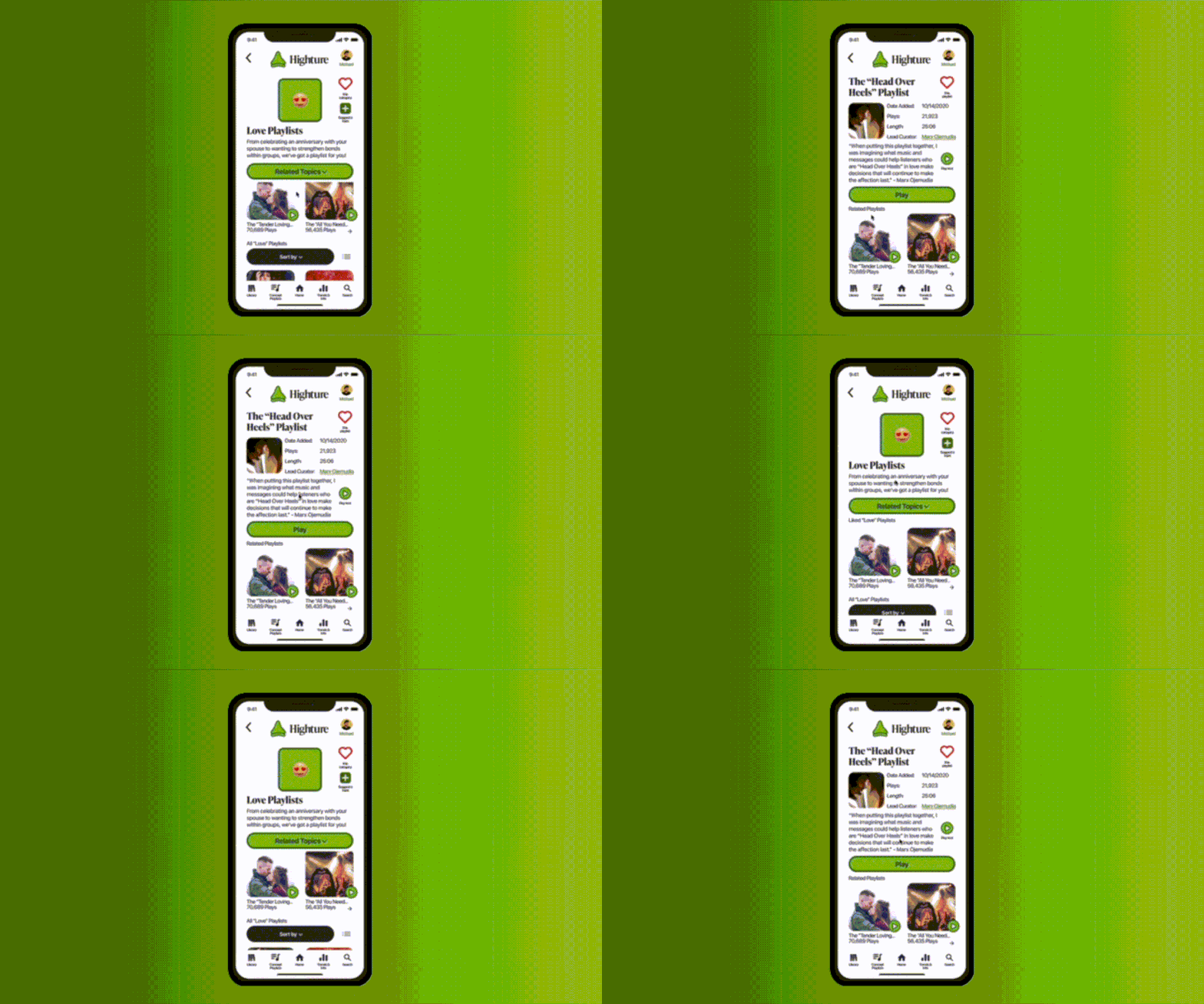
Introduction.
Problem: Value-driven Hip-Hop & R&B is hard to discover quickly on mainstream music streaming platforms.Hip-Hop & R&B helped shape my creativity and gave me a foundation for who I am today. But as I’ve grown and gone through major life changes, my needs as a listener have shifted. I look for music that pushes me forward yet much of what I hear feels repetitive or tied to incredibly harmful themes. While there’s still great music out there, it’s harder to find the songs that feel fresh, meaningful and worth my attention.I believe Hip-Hop & R&B should lift people, not make them vulnerable to negative choices. I want listeners to easily discover music that inspires growth, fuels creativity and represents the best of the culture.That passion drove me to spend nine months designing a streaming platform centered on positive messages and creative production. I led service design, interaction design and visual design efforts to shape a clear experience that could help a creative audience discover and create music that feels meaningful.
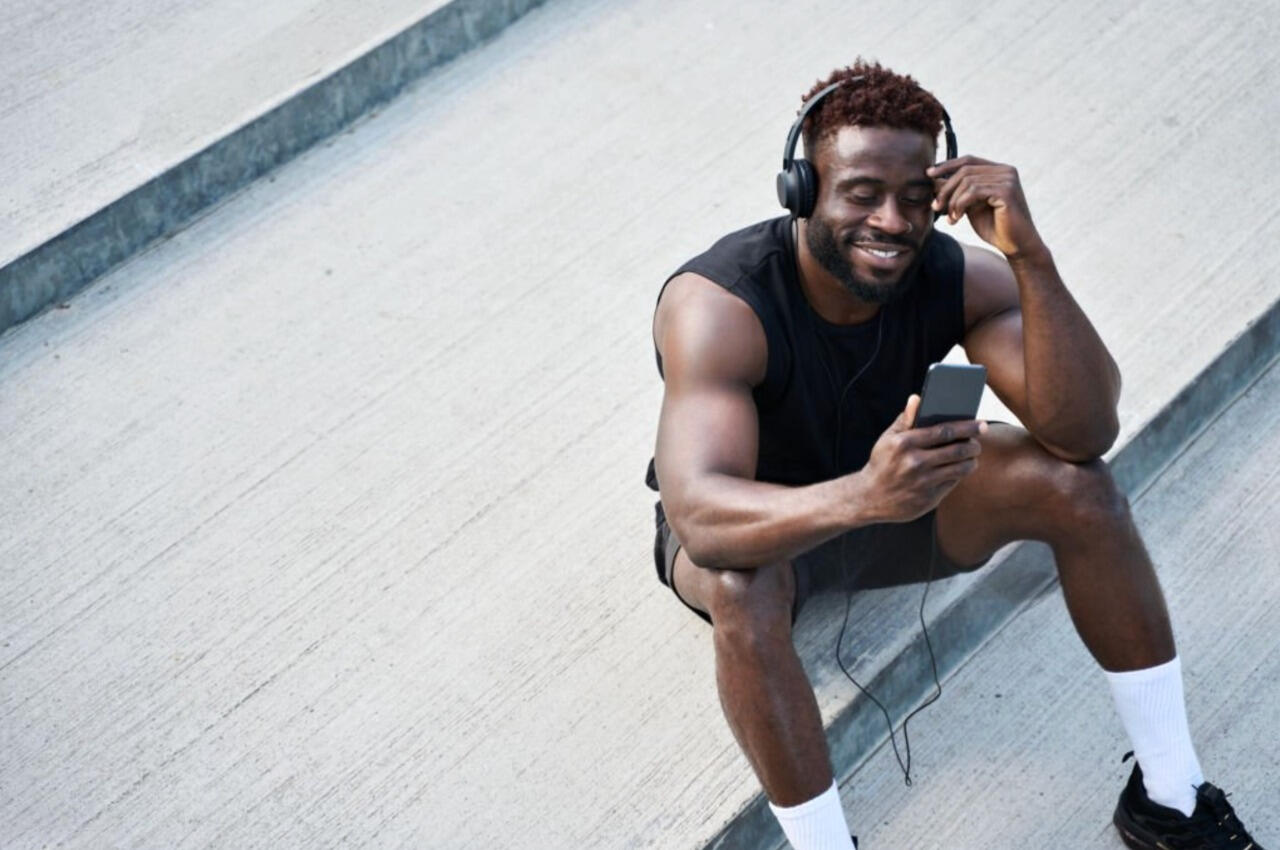
Defining the North Star.
Goal: To start this project, the goal was to define an initial North Star problem for how Hip-Hop & R&B listeners experience music discovery and generate exploratory questions that would guide the next phase of user research. The focus was on how the genres had been publicized over time, the social effects of that publicity and how listeners perceive and engage with Hip-Hop & R&B today.Methods Used:Desk Research- I reviewed academic articles, media reports, cultural commentary and inspirational stories from artists and listeners that highlighted the genres' cultural influence and current challenges.- Desk research gave the necessary context to identify whether the issues were broad or isolated. It also provided a grounded perspective to shape exploratory questions that would later be validated through surveys and interviews.
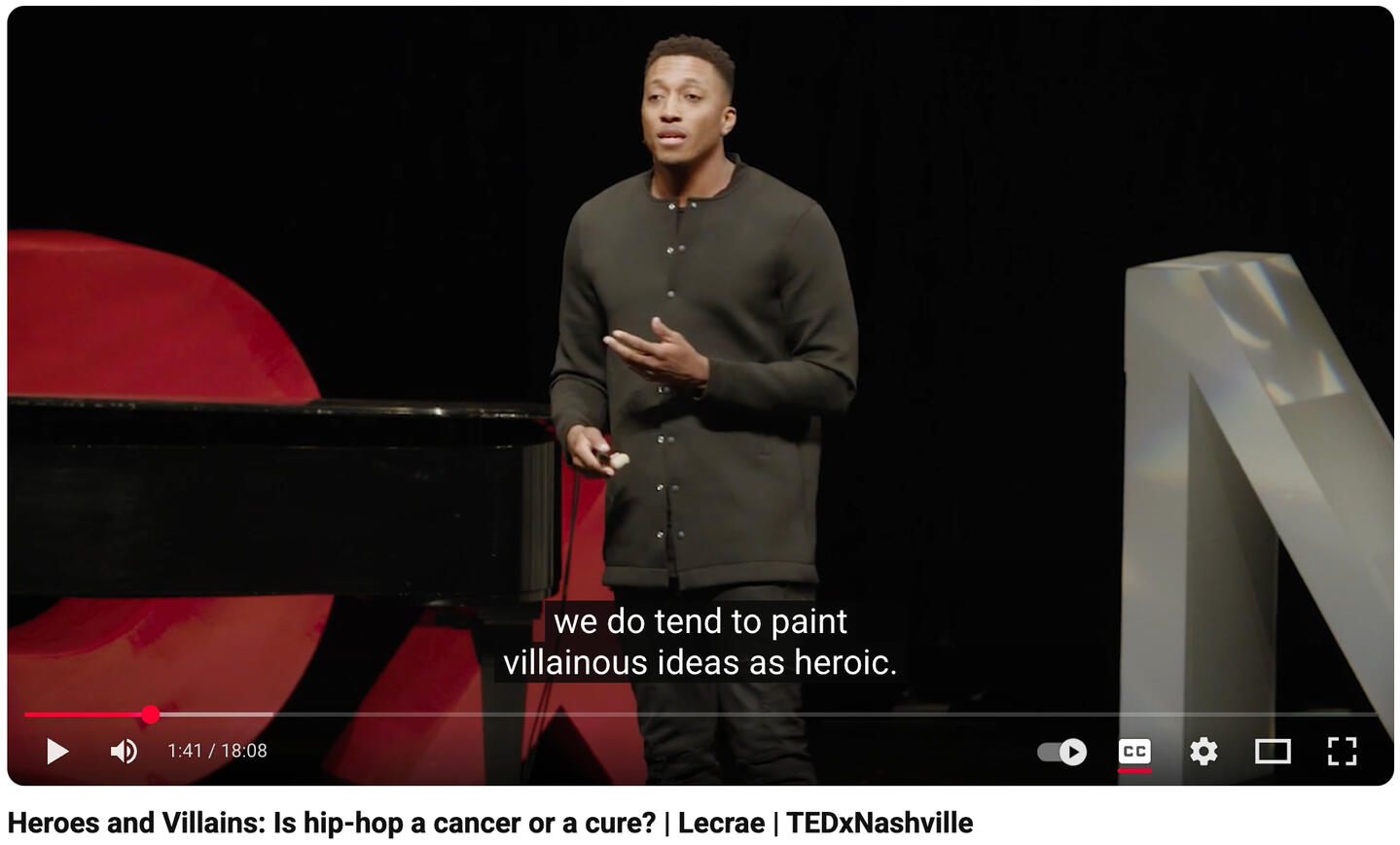
Results: The desk research surfaced themes that informed these exploratory questions:- How does the influence of musicians contribute to behaviors such as drug use among listeners?- Why do musicians perceive negative content as more commercially successful and how does that shape creative output?- In what ways does mass media leverage Hip-Hop & R&B to target adolescents and what are the social impacts of this trend?- How has the influx of media influenced the lasting value of individual Hip-Hop & R&B projects?- Why does discovering new music create such a strong sense of joy for listeners and how might a platform replicate that feeling?- How does Hip-Hop & R&B’s identity as a primarily African American artform influence cultural connection today?- What role do beats versus lyrics play in how listeners evaluate songs?This research shaped a starting North Star problem, providing direction while leaving room for deeper insights to reshape it later.- How might we design a platform that helps listeners easily discover Hip-Hop & R&B that inspires growth, reflects cultural authenticity and avoids harmful influence?
Scoping Problems, Seeing Solutions.
“If The Beat Doesn’t Make Me Wanna Dance, I Don’t Care About What They’re Saying”
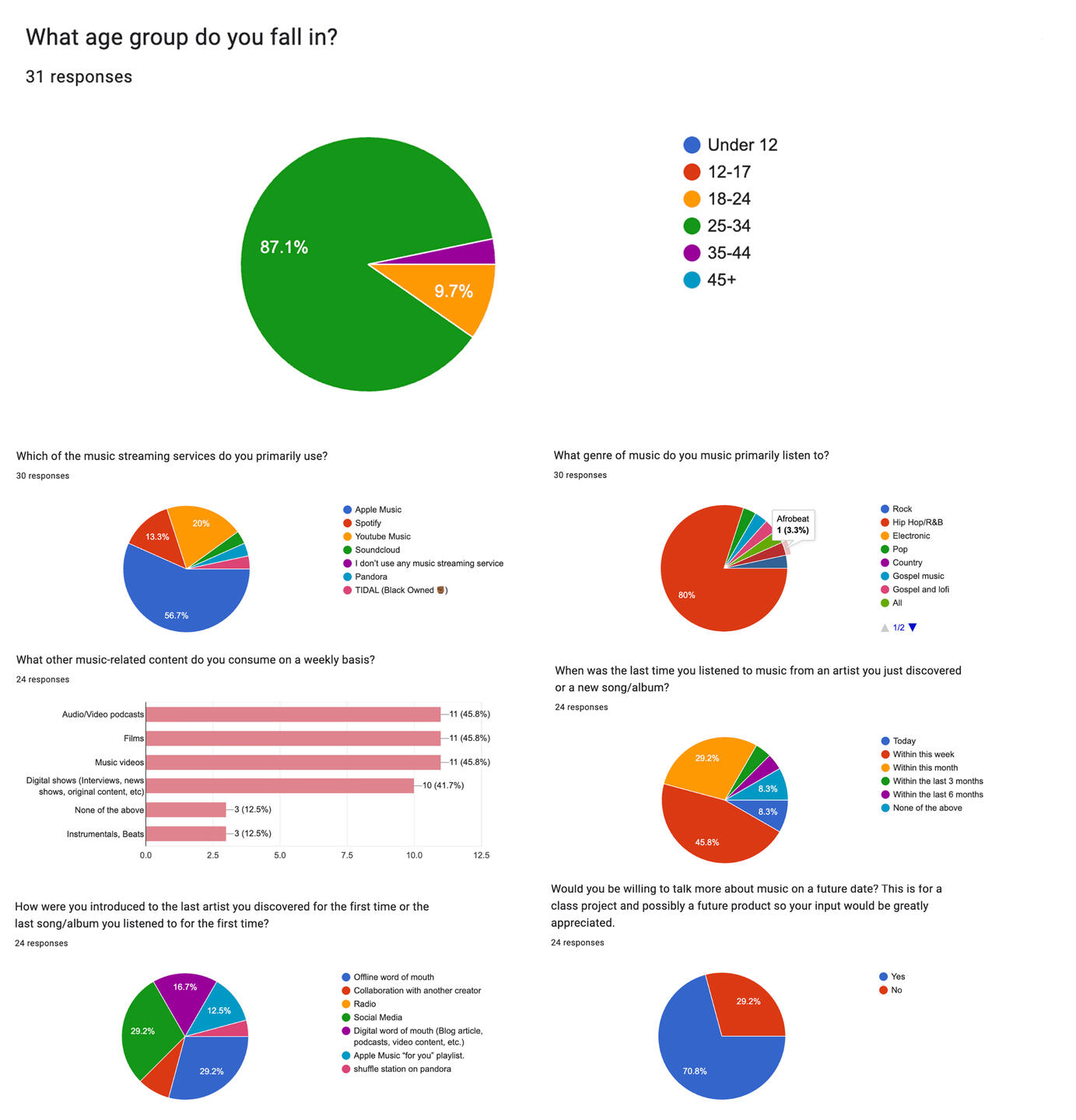
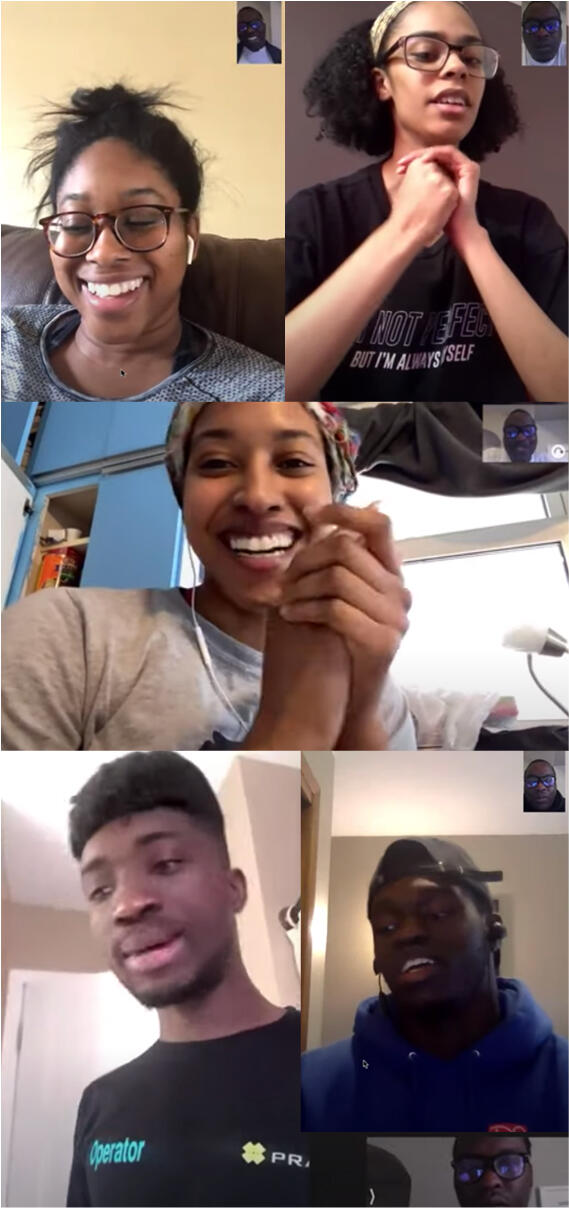
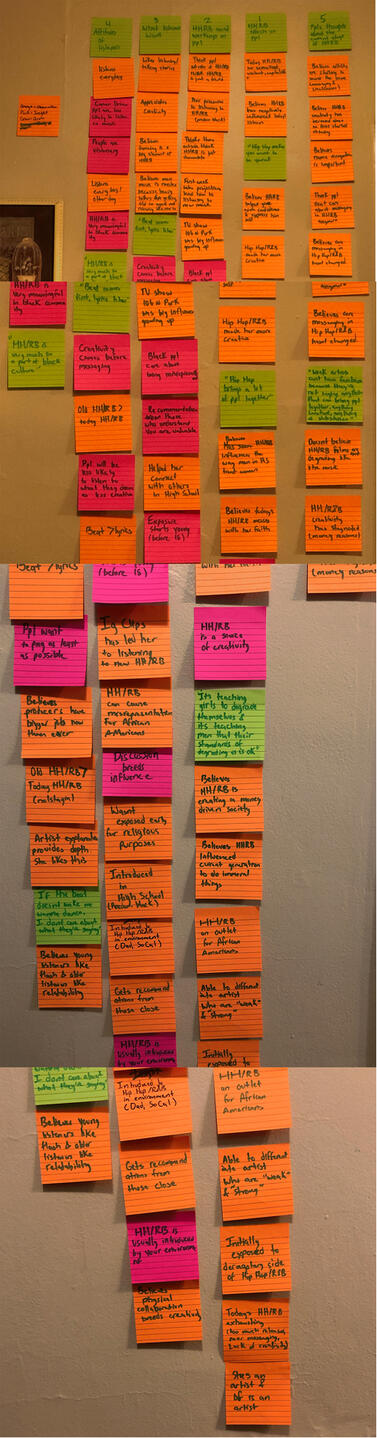
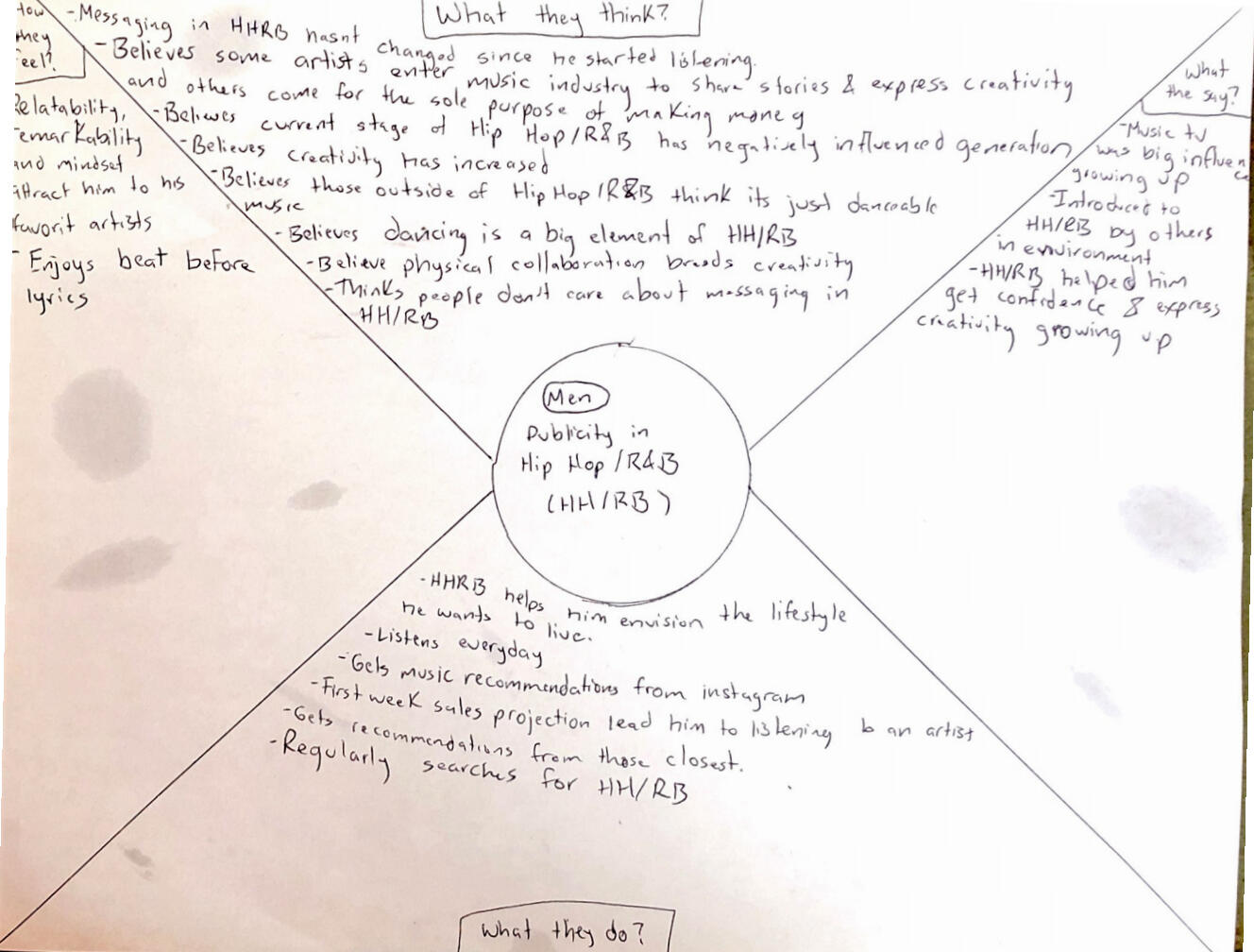
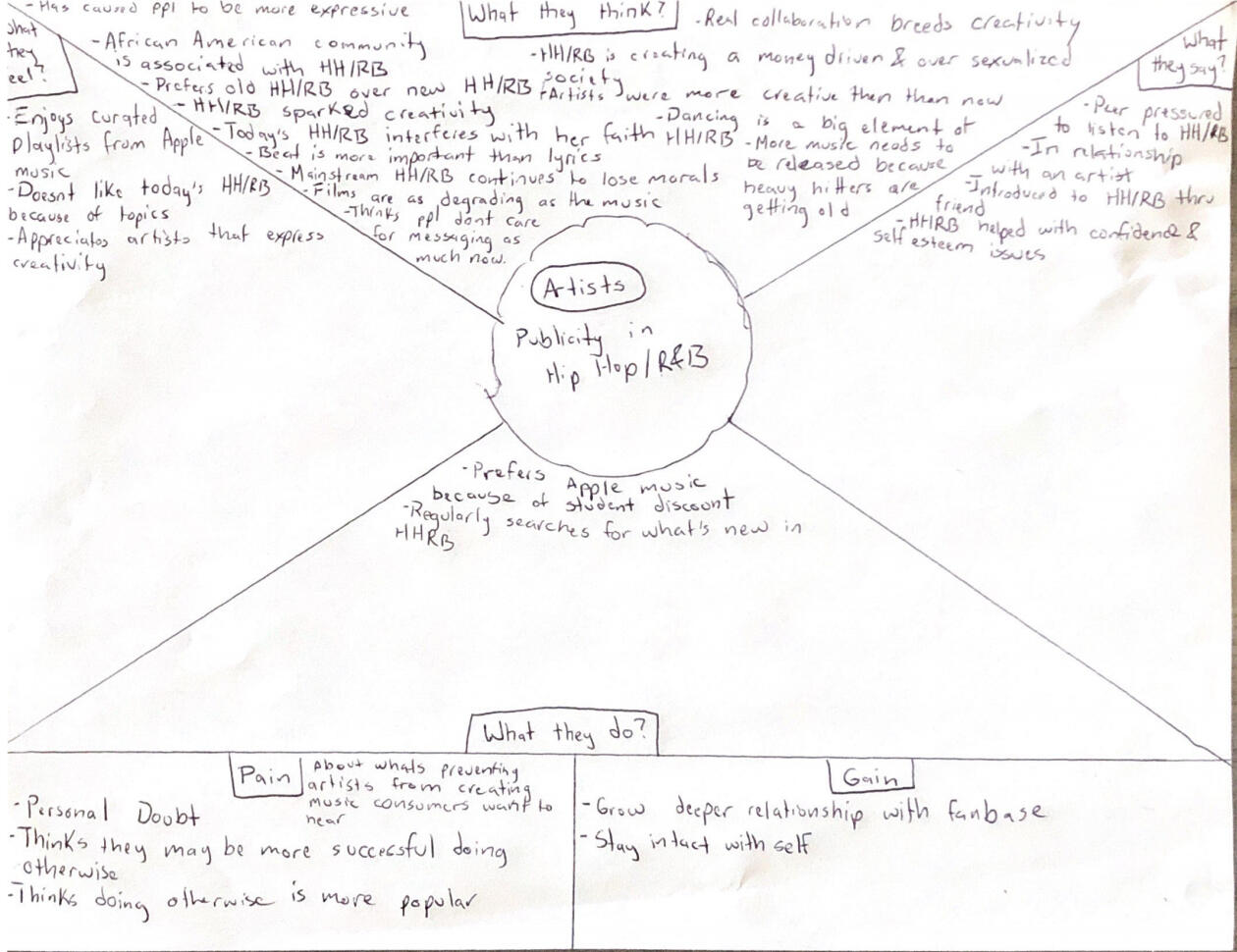
Goal: With a starting North Star problem in place, the goal at this stage was to create clear problem scopes for ideation. This meant validating the exploratory questions with real listeners and musicians, then structuring their perspectives into insights that could guide building solutions.Methods Used:Screener Surveys- I started with a screener survey to identify active listeners to gather quantitative data and screen possible interview participants who deeply connected to the Hip-Hop & R&B culture.- Screener surveys would help to ensure that the participants we were getting insight from represented the core members of today's Hip-Hop & R&B audience while understanding behaviors and attitudes about the audience through surfaced quantitative data.User Interviews- I then conducted five one-hour, open-ended interviews over video chat. Participants were randomly selected from a pool of survey takers who agreed to future music discussions.- The user interviews captured qualitative data from personal stories, motivations and frustrations that survey data alone could not explain and that could be mapped in the user's journey.Affinity Mapping- Later, I performed an affinity mapping exercise using the data from the mentioned research methods.- Affinity mapping would bring about patterns and insights from the pool of research notes and help to better frame the Hip-Hop & R&B audience discovery journey.Empathy Mapping- After affinity mapping, I broke participant experiences into thoughts, sayings, actions and feelings through an empathy mapping exercise.- Empathy mapping would expose drivers behind behaviors, create a bridge between the audience's responses and their lived experiences and provided synthesized data that could be mapped in the user's journey.Persona Building- Once I understood the patterns and actions of the Hip-Hop & R&B audience, I developed personas of the two user segments I discovered were within the audience: the listener and the creator.- Building personas of these user segments would help tell a detailed story of the Hip-Hop & R&B audience and ensured that design decisions stayed user-centered.User Journey Mapping- After creating the personas, I mapped out what each user goes through the journey of discovery and creating, showing how the audience discover music to how they engage with it.- The journey map would visualize where the audience felt inspired or frustrated and pointed out clear moments where design could make their experience better.
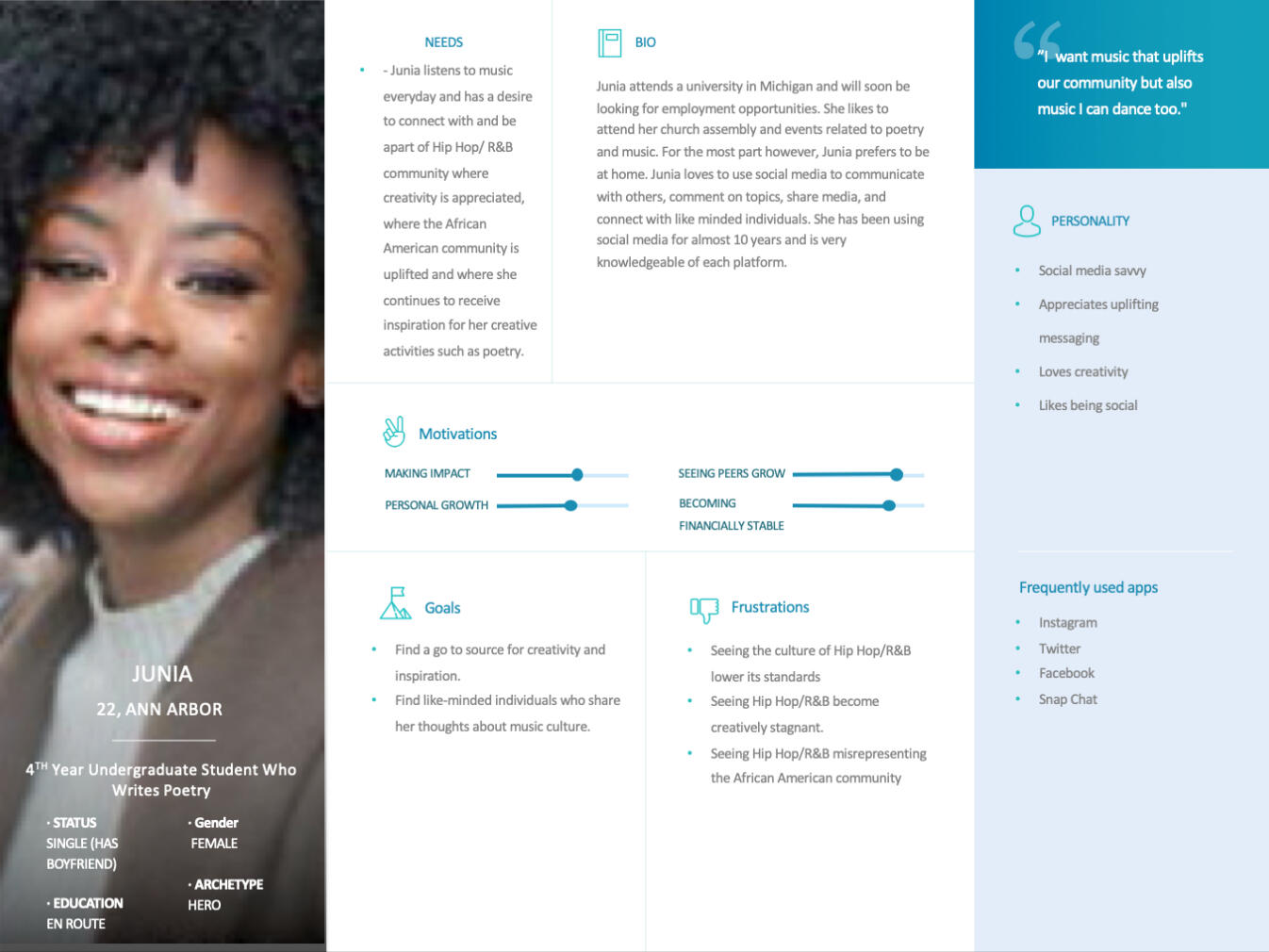
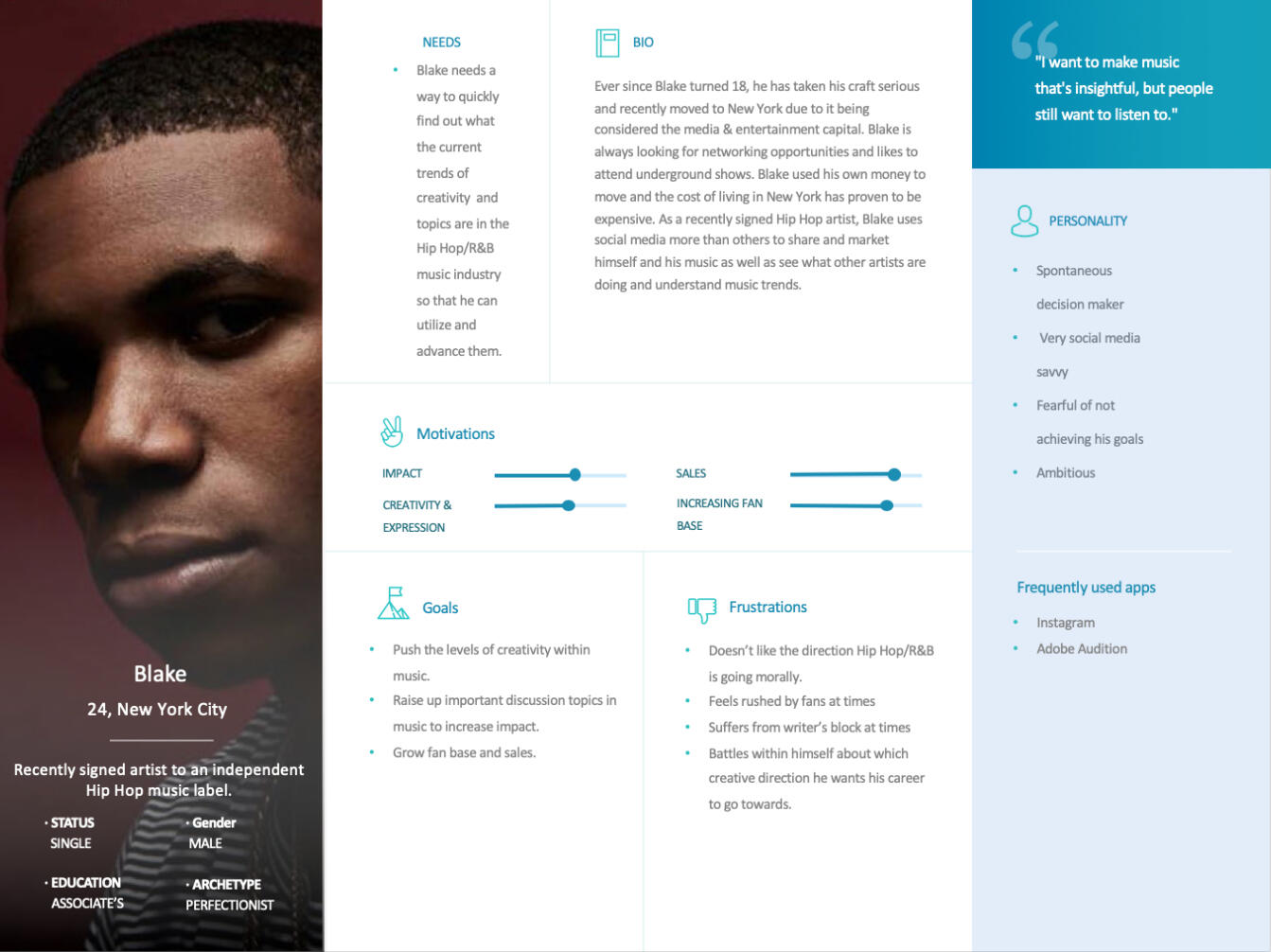
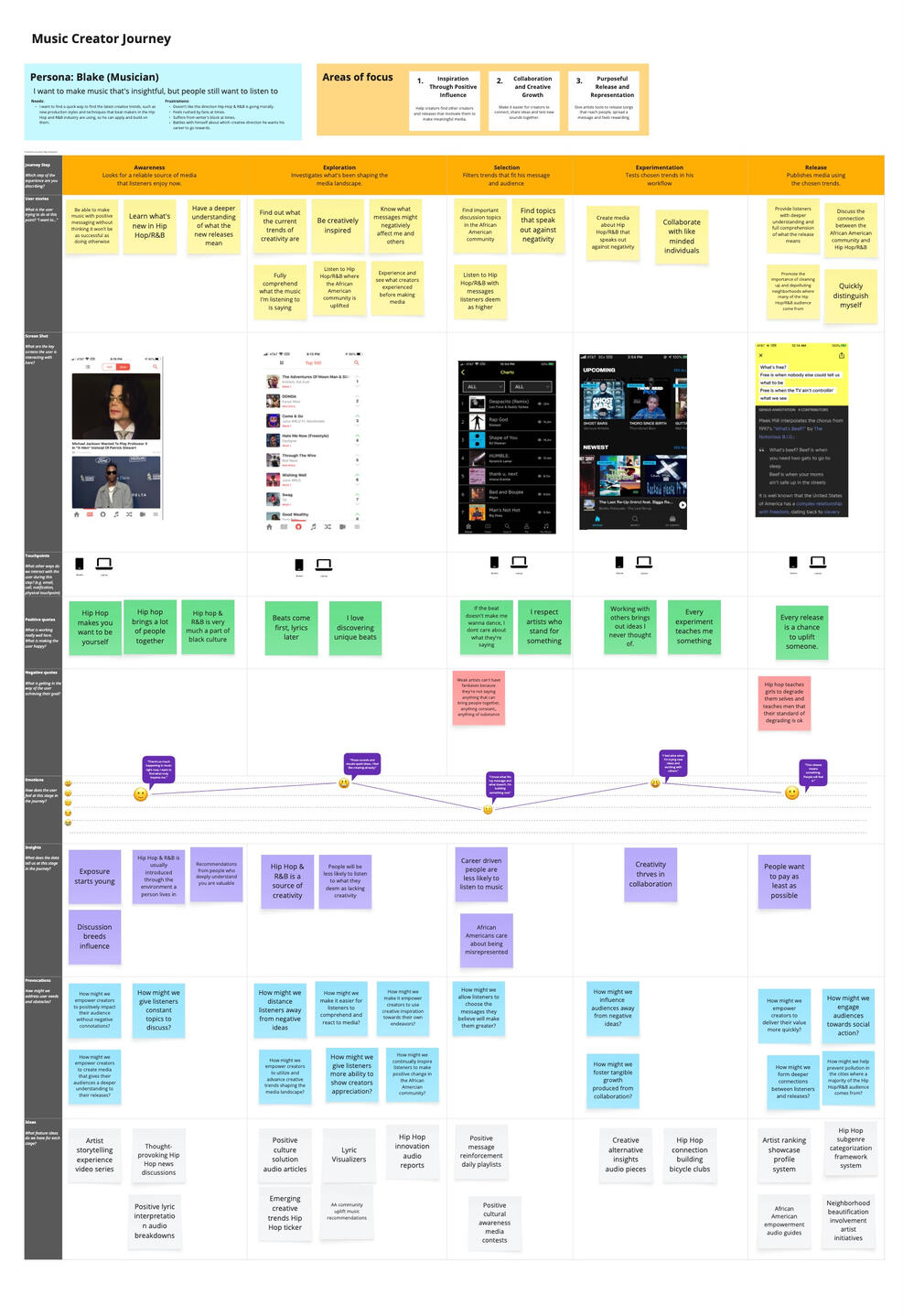
Outcome: This discovery and synthesis process surfaced a range of solutions focused on positive messaging, creativity and cultural uplift. After analyzing the ideas in the user journey map for feasibility, desirability and viability, three concepts were prioritized for the minimum viable product (MVP):Daily Recommended Playlists: Curated playlists showcasing Hip-Hop & R&B that spread positive messages and highlight creativity fed to users on daily basis.Ranked Ticker List: A dynamic feed spotlighting creative trends across the culture, from production techniques to fashion.Exploratory Blog: A platform introducing listeners to Hip-Hop & R&B’s many subgenres and the artists shaping them.Based on the user journey map, the experience was beginning to take shape as a tool primarily creators would use to get musical insight from and then create insightful art. Moving forward, I would use this insight to design a more tailored experience towards Hip-Hop & R&B creators.
Shaping A Single Platform.
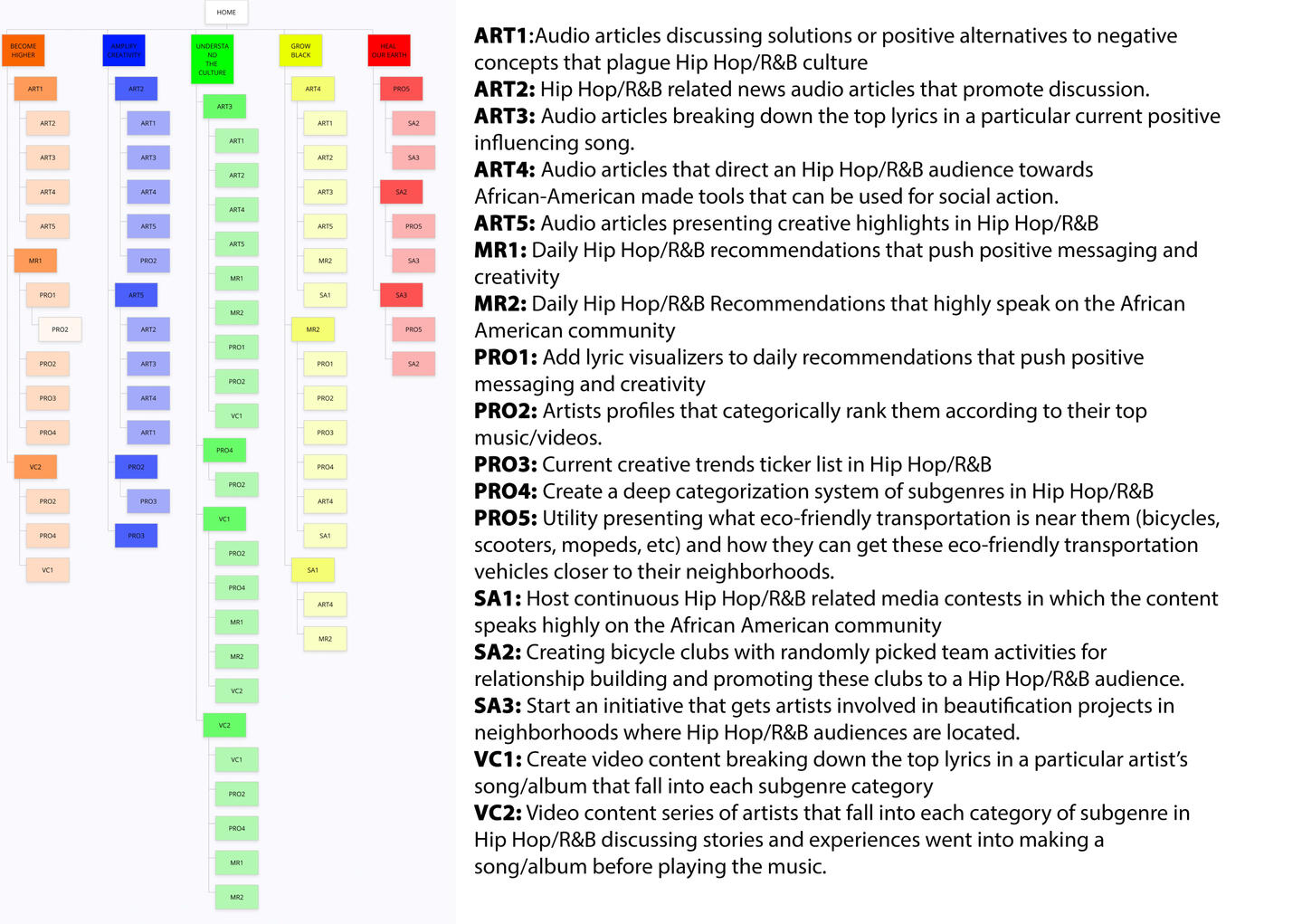
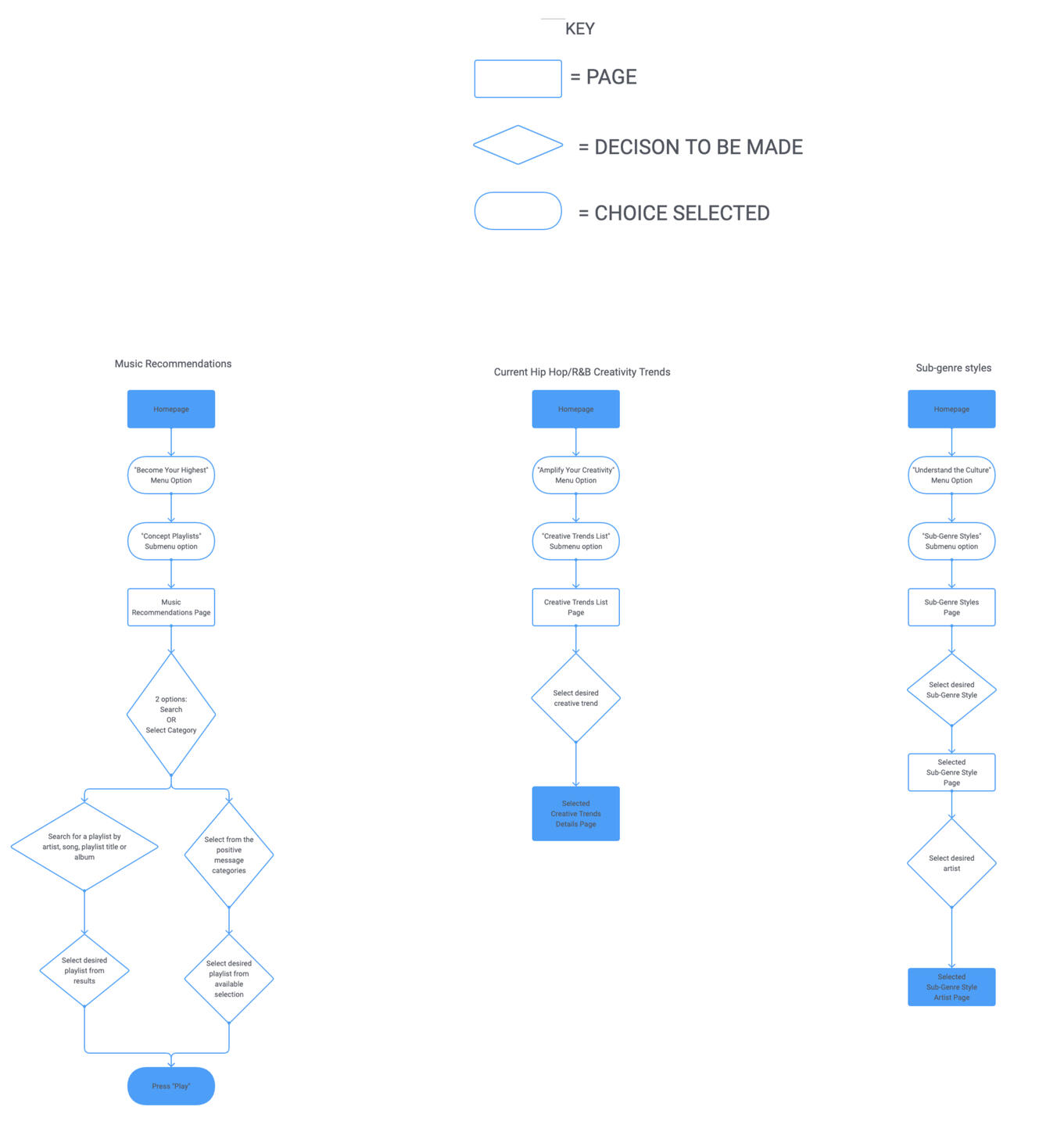
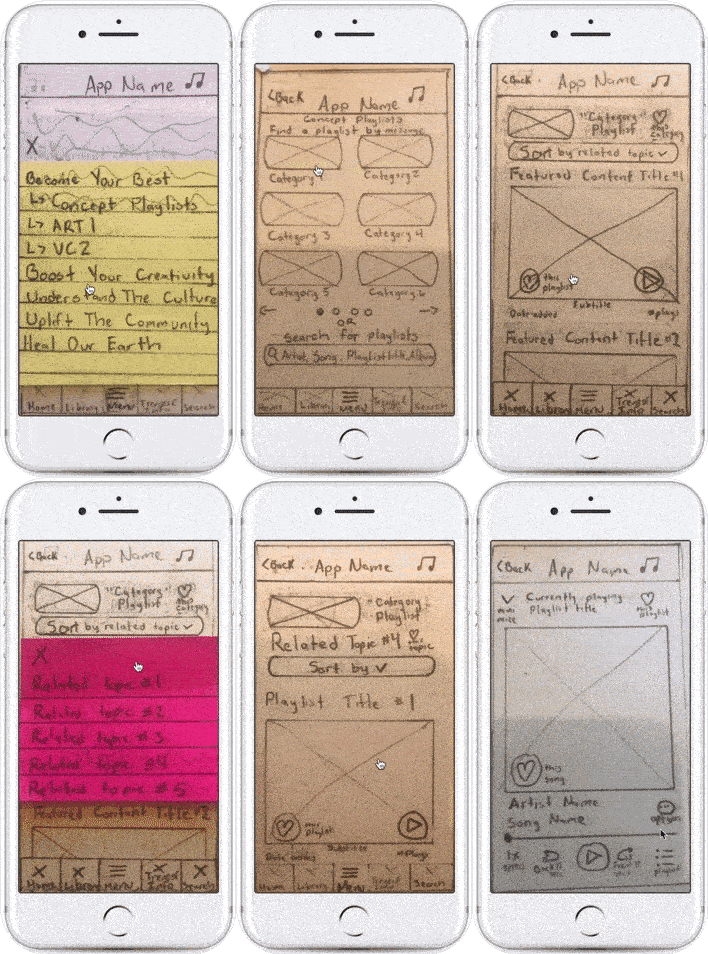
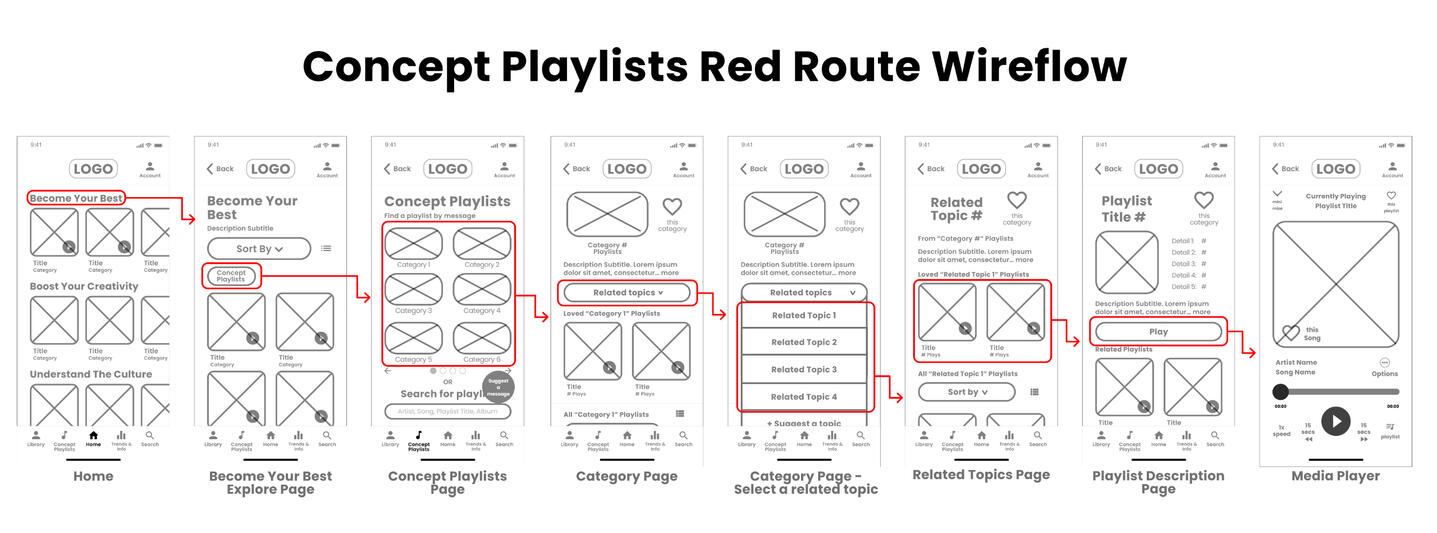
Goal: With MVP concepts defined, the goal at this stage was to structure the platform so creators could flow through the concepts while staying engaged. The challenge was to design an interaction system that feel intuitive to creators and inspired them to use the platform with purpose.Methods Used:Site-mapping- I used site-mapping to find a meaningful way to connect all the ideas through their content types.- The structure did not resemble a standard media library as it aimed to reflect how creators could shape Hip-Hop and R&B for the better.User Flows- I designed user flows of each concept to visualize and streamline how musicians would move through the platform to achieve their goals.- User flows clarified how each MVP feature connected to musician's intent and ensured the experience felt seamless from entry to action.Heuristic Audit- I performed heuristic evaluations on well-known existing Hip-Hop & R&B media platforms that have long shaped how core fans consumed music news, lyrics and releases.- Reviewing the platform's design and usability through a heuristic audit helped identify user interface strengths and gaps that would later inform how the concepts were presented.Sketching, Prototyping, Usability Testing & Iteration- I drafted a low-fidelity sketch of the flow of each concept and then transformed the sketch into an interactive prototype combining the flows into a single platform using the Marvel app.- I then conducted guerilla usability testing. I tested each MVP concept for task success and satisfaction with randomly chosen users in a nearby coffee shop. Based on feedback, I iterated on the prototype to improve usability and engagement.- This process allowed me to test assumptions quickly, gather feedback and refine the design early.Wireframing & Prototyping- I built low-fidelity wireframes from the sketches to define the platform's grid structure and visual hierarchy.- Wireframing was used to bring order, consistency and clarity to the platform’s layout.

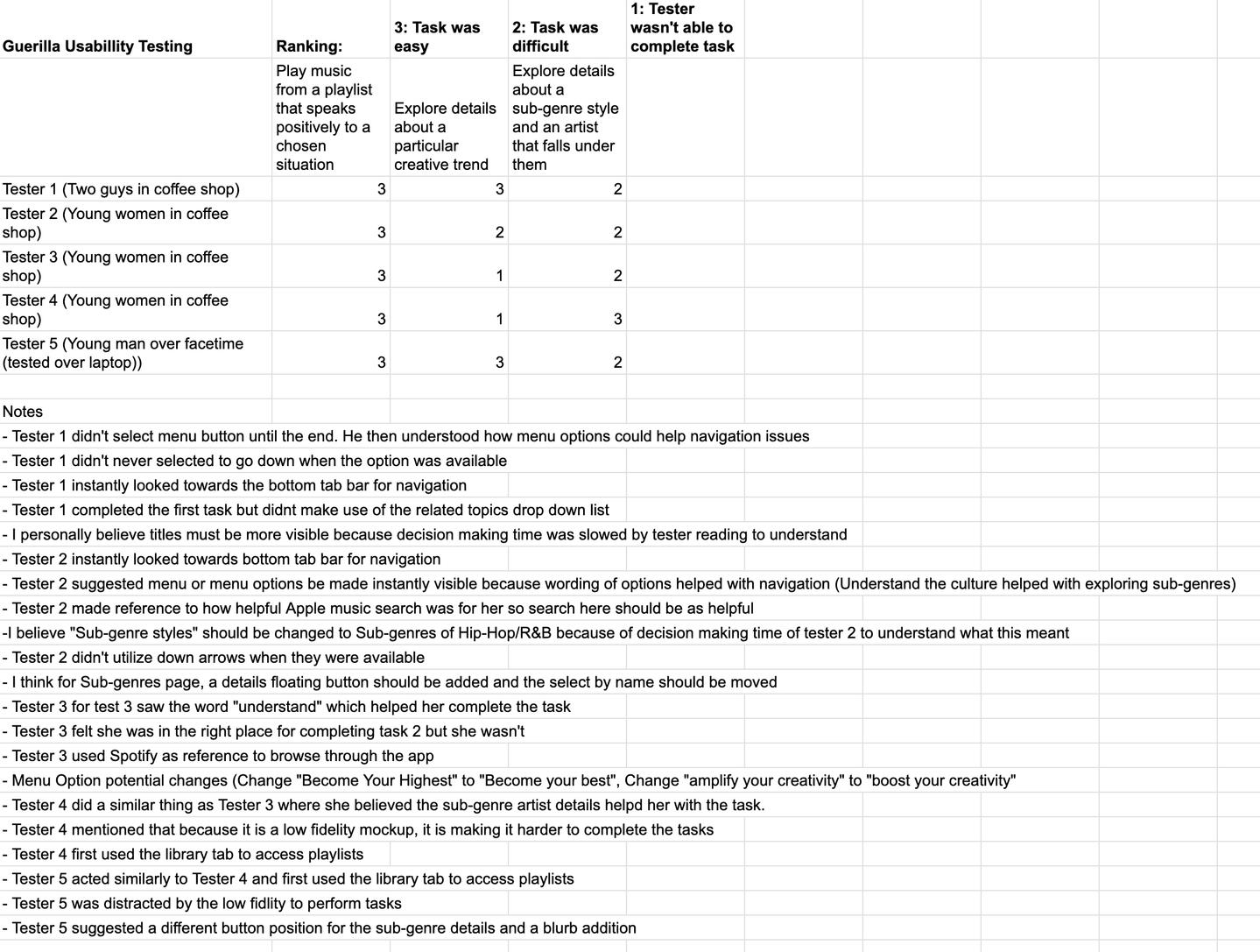
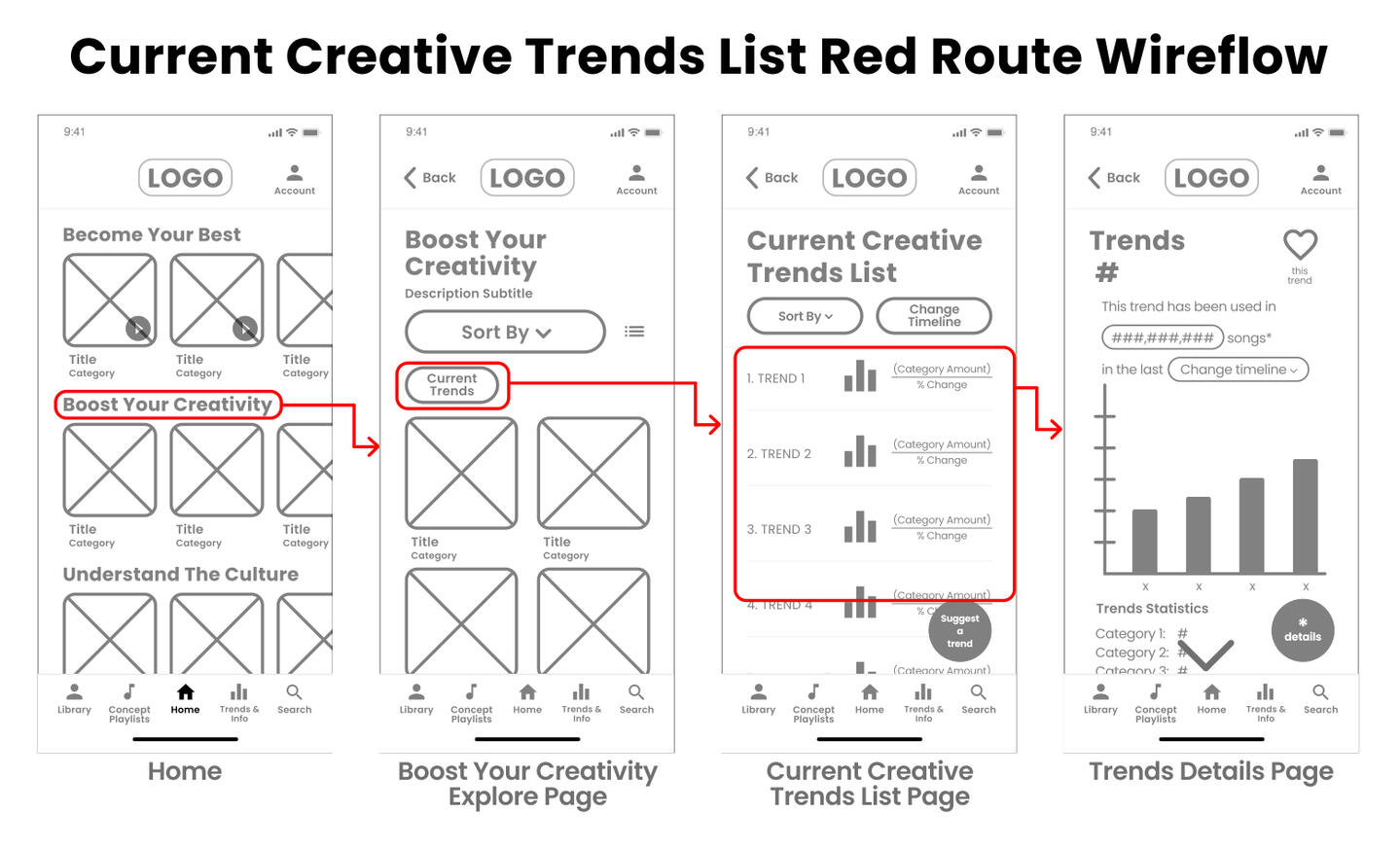
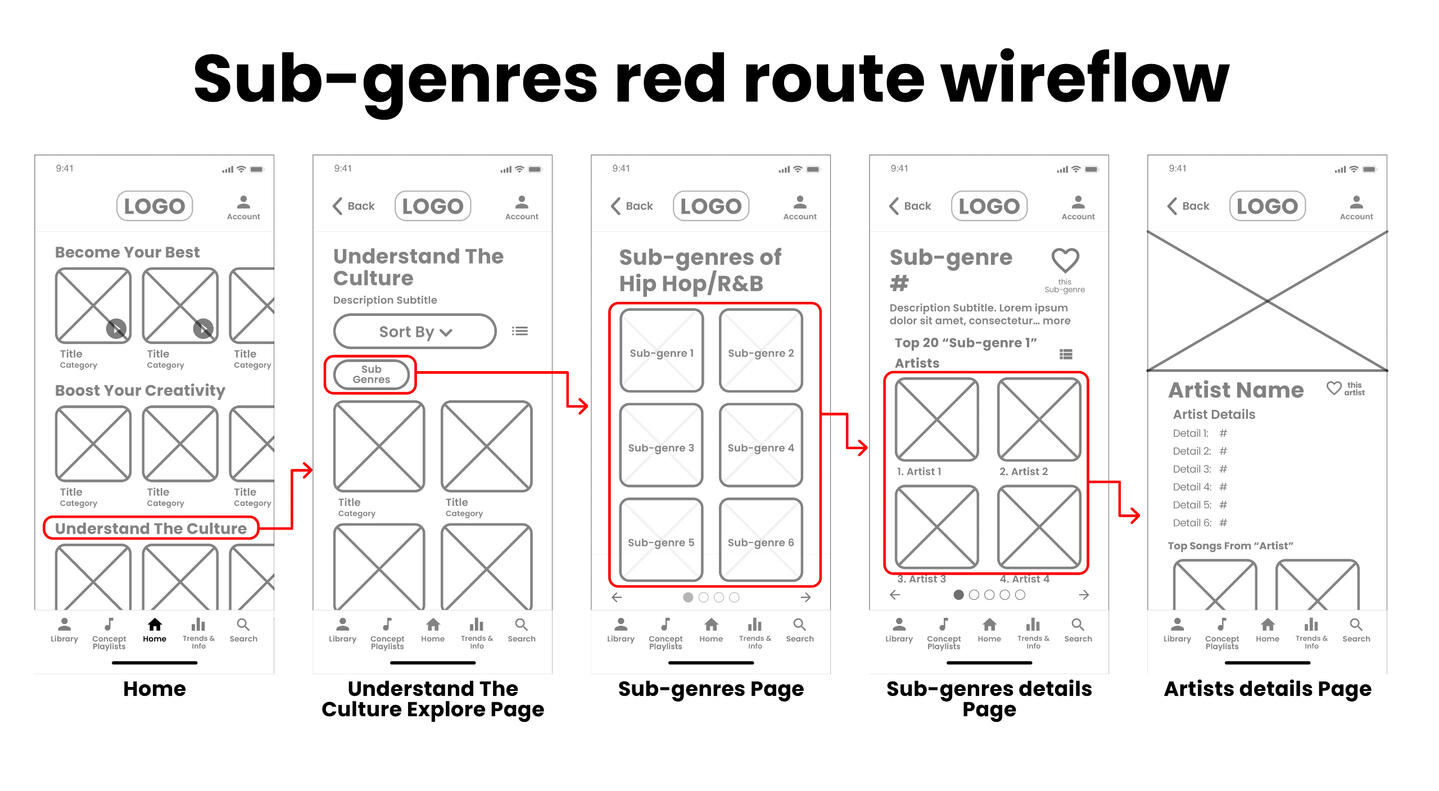
Results From Task Success & Satisfacton Usability Testing:
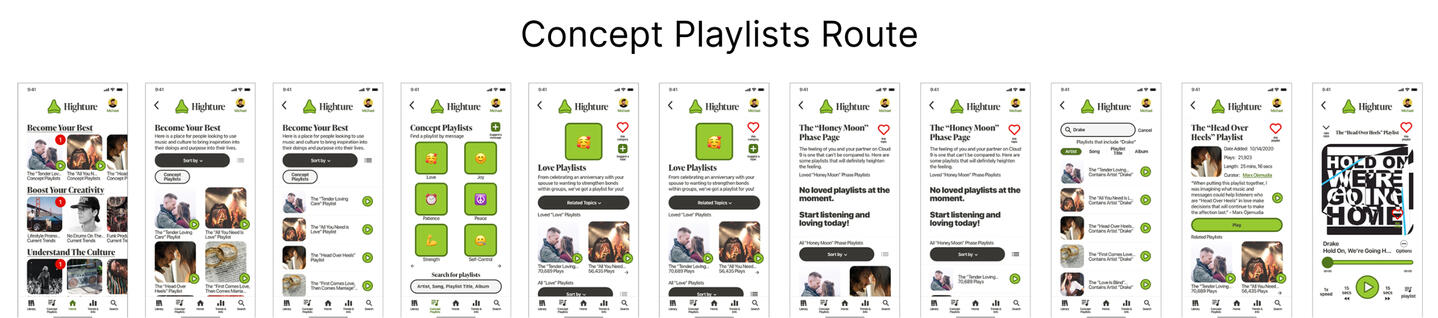
Concept Playlist Task (Play music from a playlist that speaks positively to a certain situation):
- Average Success Rate: 100%
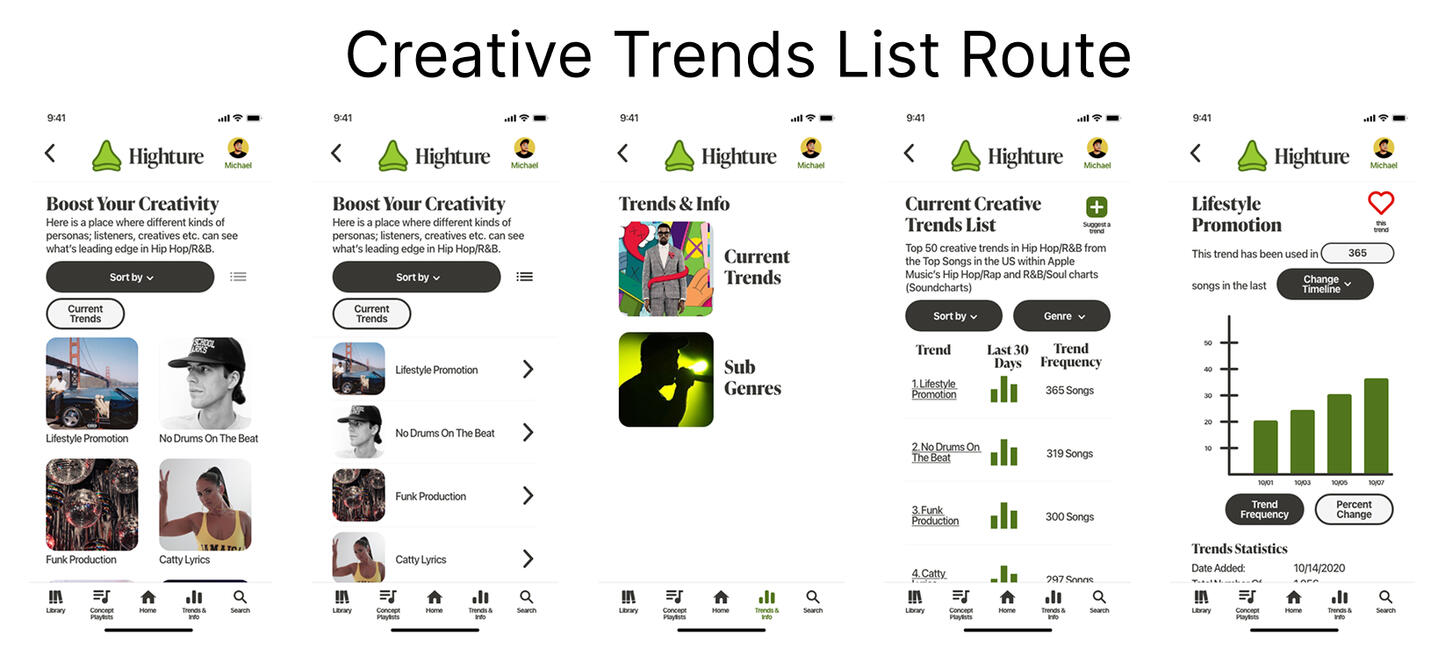
- Average Satisfaction Score: 3.0 (easy)Creative Trends List Task (Explore details about a creative trend):
- Average Success Rate: 80%
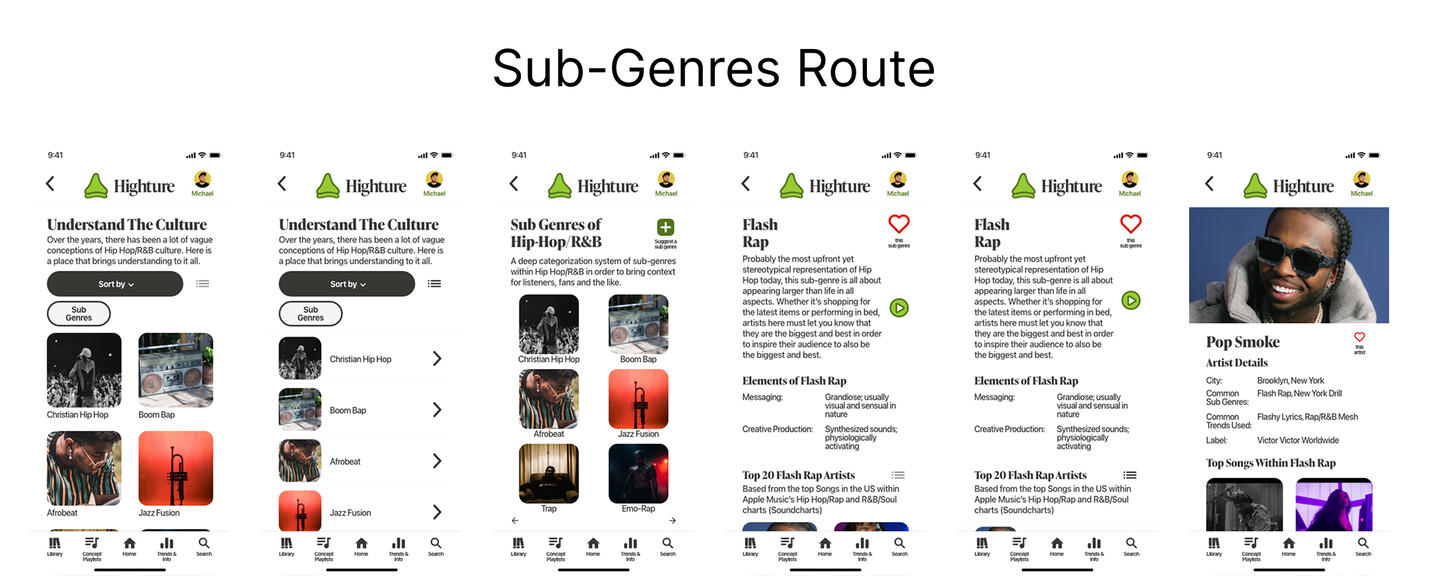
- Average Satisfaction Score: 2.0 (moderately difficult)Sub-Genres Task (Explore sub-genre style and an artist in the sub-genre):
- Average Success Rate: 80%
- Average Satisfaction Score: 2.2 (moderately difficult)Insights:
Users expect navigation that looks and works like mainstream apps such as Spotify and Apple Music, so hidden or low-contrast elements cause friction. Exploration tasks need clearer entry points, simpler terms and visible actions. When navigation departs from standard patterns without clear signals, users get lost. Language needs to be literal and instructional, not abstract, action-oriented terms improve comprehension. Because visual clarity and content structure drive success, higher-fidelity prototypes should be tested earlier in the process.
Visual Design.
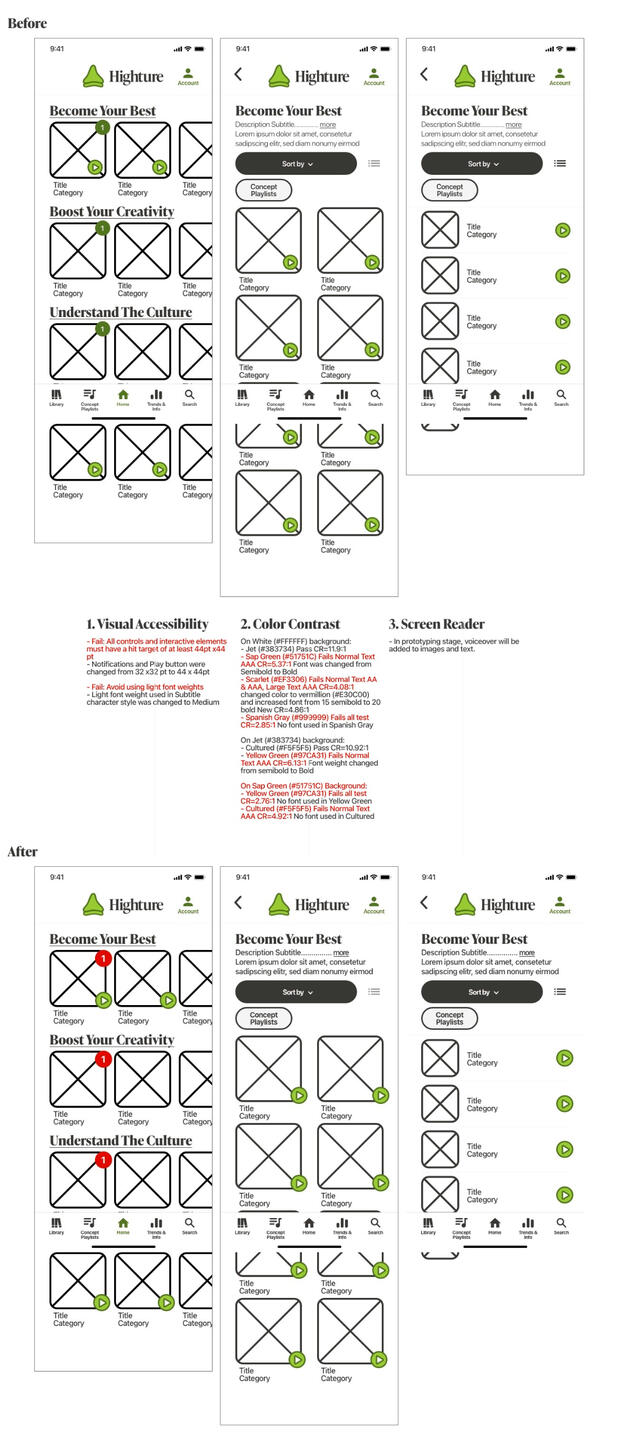
Goal: With the core interaction patterns established, the goal at these final stages were to give the platform a consistent identity that felt both intuitive and emotionally engaging. The challenge was to design a visual system that not only guided musicians clearly through the platform but also inspired them to see it as a tool for growth and creativity.Methods Used:Brand Platform & Style Guide Development- I developed a brand personality and attributes for the brand platform to guide the design language.- I created a style guide including logo, typography, iconography, UI elements and structured color palette.- Developing a brand platform & style guide gave the platform a consistent voice that felt approachable, motivational and forward-thinking while keeping interactive elements grounded in clarity and utility.Accessibility Testing- I ran accessibility checks on color contrast, typography and element sizing.- Accessibility testing ensured inclusivity and compliance with WCAG standards so the platform would be usable and comfortable for diverse audiences.User Interface Styling, Prototyping & Testing- I applied the style guide to create high-fidelity screens. Then I built an interactive prototype for usability testing.- I later conducted five remote, moderated sessions for usability testing.- At this point, I could not only test interaction flows but also visual clarity, consistency and emotional resonance.
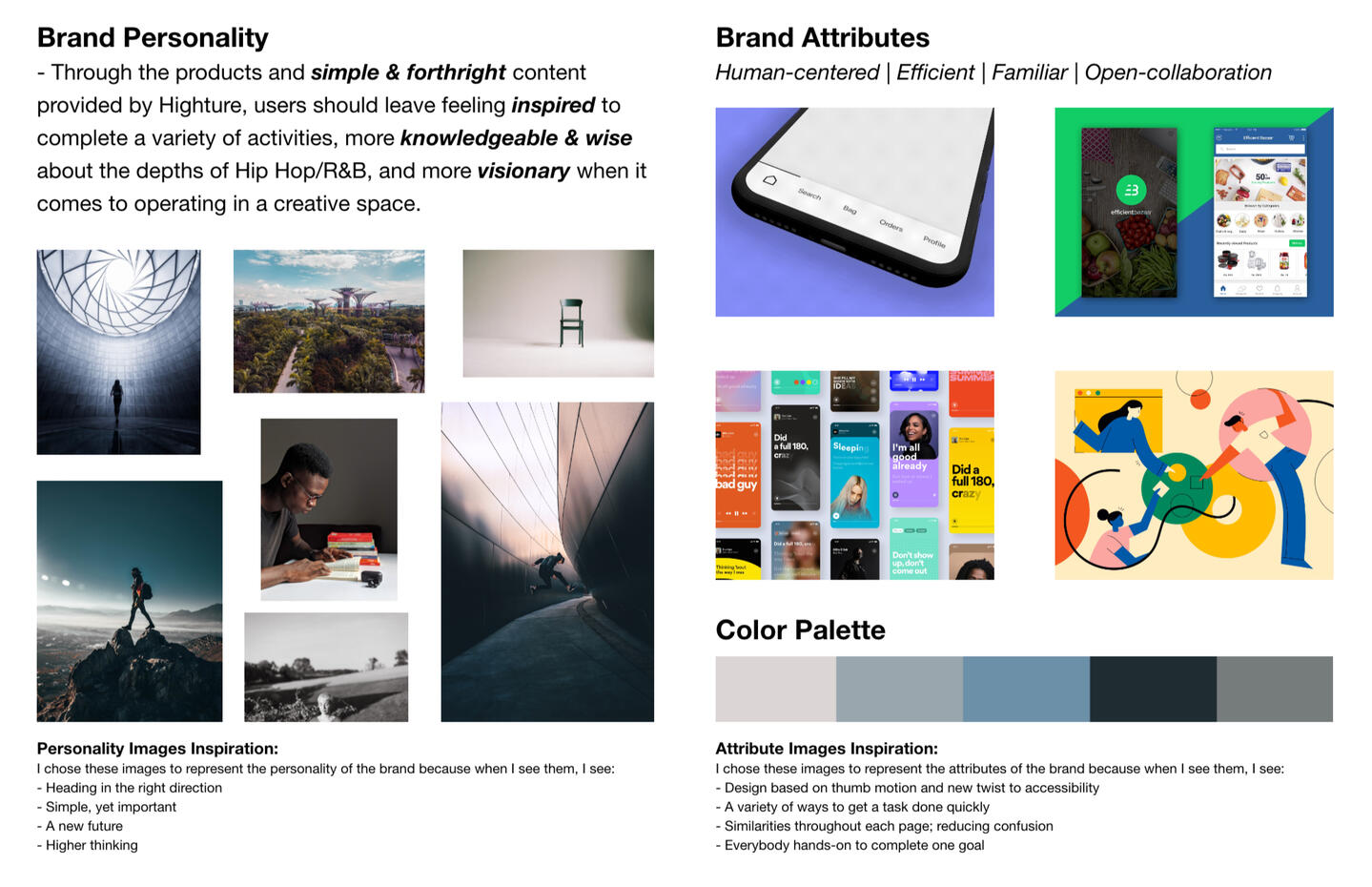
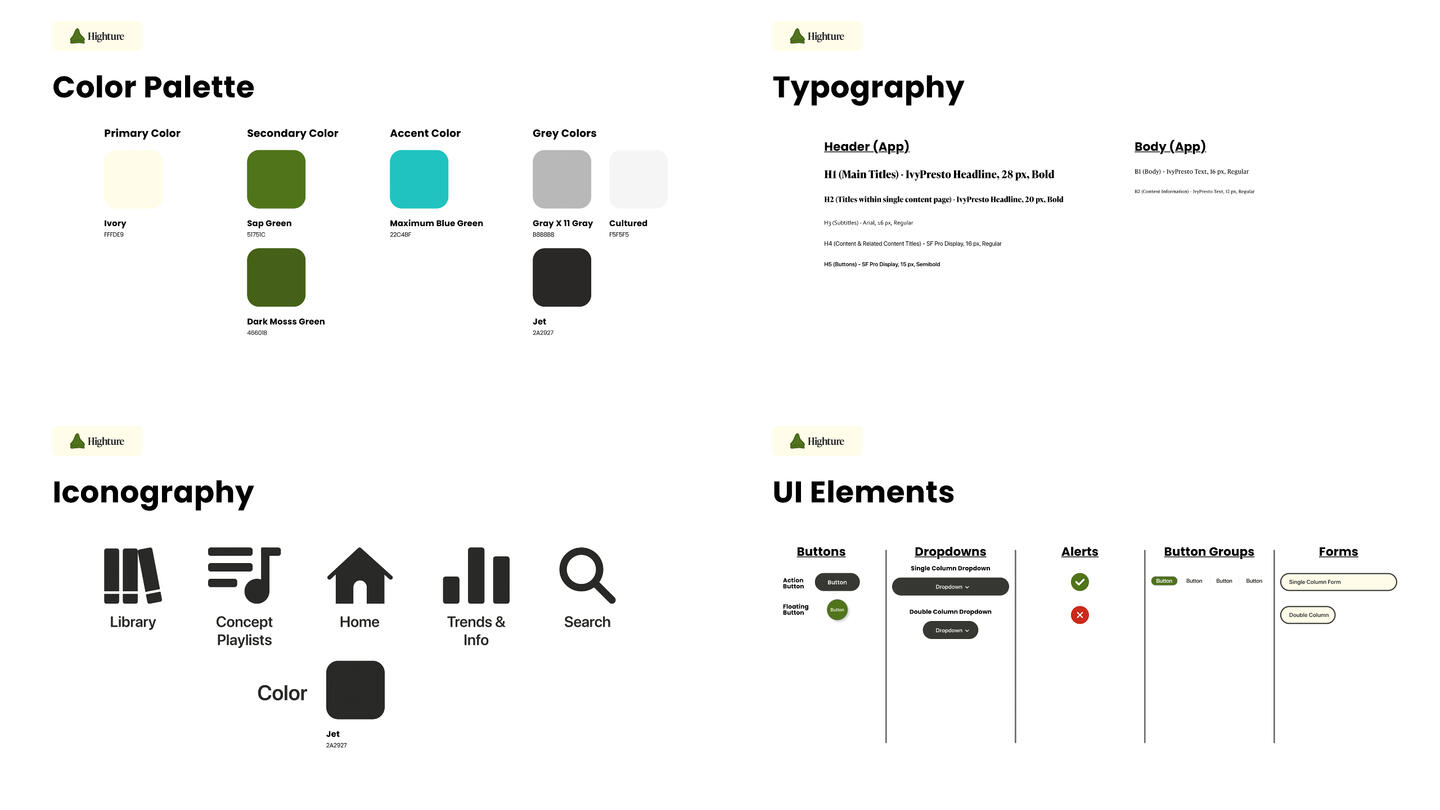
Results From Task Success & Satisfaction Usability Testing:
Concept Playlist Task (Play music from a playlist that speaks positively to a certain situation):
- Average Success Rate: 100%
- Average Satisfaction Score: 3.0 (easy)Creative Trends List Task (Explore details about a creative trend):
- Average Success Rate: 60%
- Average Satisfaction Score: 2.0 (moderately difficult)Sub-Genres Task (Explore sub-genre style and an artist in the sub-genre):
- Average Success Rate: 60%
- Average Satisfaction Score: 2.0 (moderately difficult)Insights:
Users found playlist discovery easy and natural, calling it “Spotify-like.” Terms like “Loved Playlists,” “Creative Trends,” and “Sub-genres” confused them, since the meaning wasn’t clear. Most expected navigation to work like Spotify or Apple Music, using the home menu or bottom tabs and skipping hidden buttons. Tasks that asked for abstract thinking, like “Creative Trends,” slowed people down, while direct, action-based terms worked better. They described the interface as clean, diverse and easy to use, saying visuals helped them finish tasks. Some asked for background color options to make the experience more personal and readable.

Reflections
This project showed me that navigation depends on who you design and test with. The platform looked solid, but the navigation struggled because the information architecture wasn’t built or tested with music creators. I designed flows that made sense to me, not to the people who’d use them every day. If I had worked with creators earlier to map how they discover, categorize, and engage with music, the structure and language would’ve felt natural instead of forced.Next time, I’ll involve the right audience from the start and build the information architecture around how they think. Testing navigation with them early will shape a system that matches their creative process instead of teaching them a new one. One tester said the platform could “reshape Hip-Hop & R&B by inspiring better artistry.” That reminded me that meaningful design only happens when the people you’re designing for help shape it.